@kidpro_india
 KhiladiPro
 @Khiladi-Pro
 kprosport.com
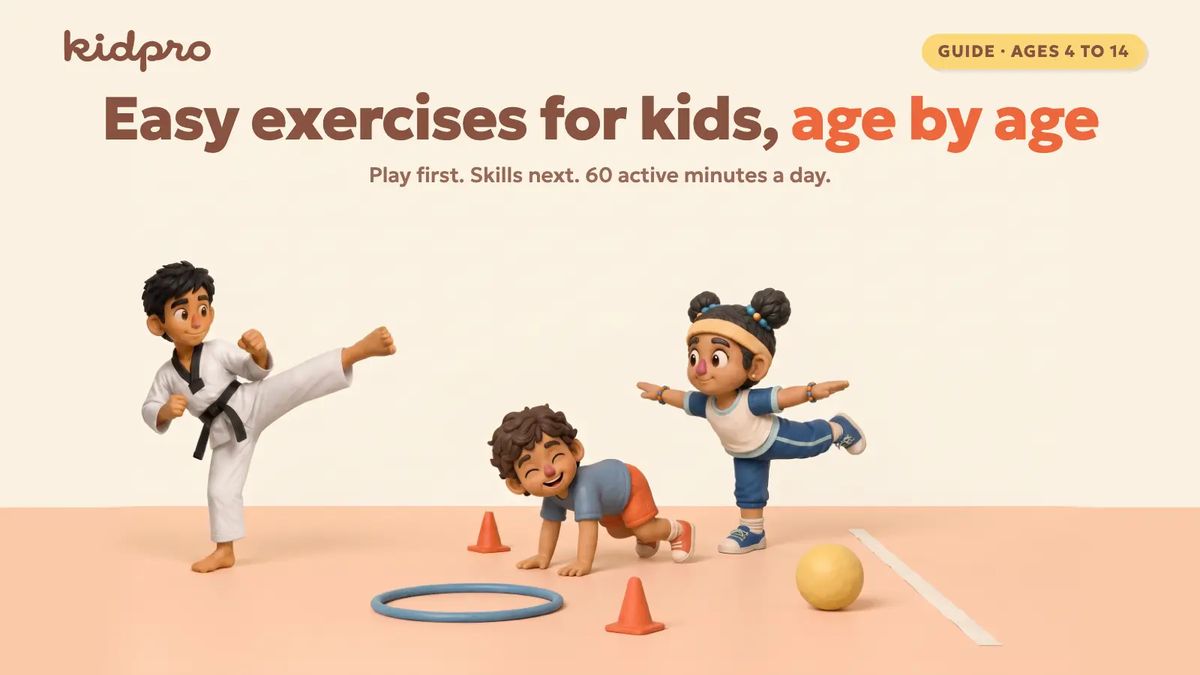
Easy exercises for kids don't need a gym or equipment. A bear crawl across the living room, a tree pose held while you count to ten, a hopscotch grid taped to the floor: simple moves like these build the strength, balance and coordination a growing child needs.
This guide comes from the coaching team at KidPRO, where certified coaches run live online classes for children aged 4 to 14. Below is what we've seen work at each age, and what doesn't.
What are the best easy exercises for kids?
The best exercises for kids aged 4 to 14 are simple, playful movements matched to the child's age: animal walks, jumping and landing games, balance challenges, kids' yoga and basic martial arts drills. Children aged 5 and older should average at least 60 minutes of moderate-to-vigorous activity a day, and younger children should be active throughout the day.
Why exercise matters between ages 4 and 14
The World Health Organization's 2020 guidelines link regular activity in children to better heart and muscle fitness, stronger bones, better attention and school performance, fewer symptoms of depression and a healthier body weight.
Parents usually notice the softer changes first: active kids tend to sleep better and settle into homework faster.
Childhood is also when basic movement patterns get learned. Running, jumping, landing and balancing are skills, and like reading they come more easily when practised early.
We see this in our own classes. A shy 5-year-old who can't hold a balance pose for three seconds in week one is often leading the warm-up by week eight, after nothing more dramatic than steady, age-appropriate practice.
How much exercise do kids need each day?
The WHO recommends that children aged 5 to 17 get at least an average of 60 minutes a day of moderate-to-vigorous physical activity, mostly aerobic. On at least three days a week, that should include vigorous activity and exercises that strengthen muscle and bone. Running, turning and jumping all count as bone-loading work at this age.
For 3- and 4-year-olds the guidance is different: at least 180 minutes of activity of any intensity spread through the day, of which at least 60 minutes is moderate-to-vigorous.
The daily total doesn't have to come in one session. Here's how we suggest families split it:
- Ages 4 to 6: frequent 10 to 15 minute bursts of active play, plus one or two short structured sessions a week.
- Ages 7 to 9: free play most days and two or three structured classes a week. Most kids this age can focus for 20 to 30 minutes.
- Ages 10 to 14: three or more days of structured, skill-based training mixing cardio, strength and flexibility.
If your child is a long way from 60 minutes, start small. The WHO's own advice is that some activity is better than none, and that children should build up frequency and intensity gradually. Repetitive high-impact drills and adult-style workouts strain growing joints, so aim for consistency and variety.
Easy exercises for kids by age
Exercises that are too advanced cause frustration and sloppy form; ones that are too easy cause boredom. Treat these age bands as a starting point, since coordination matters more than birthdays.
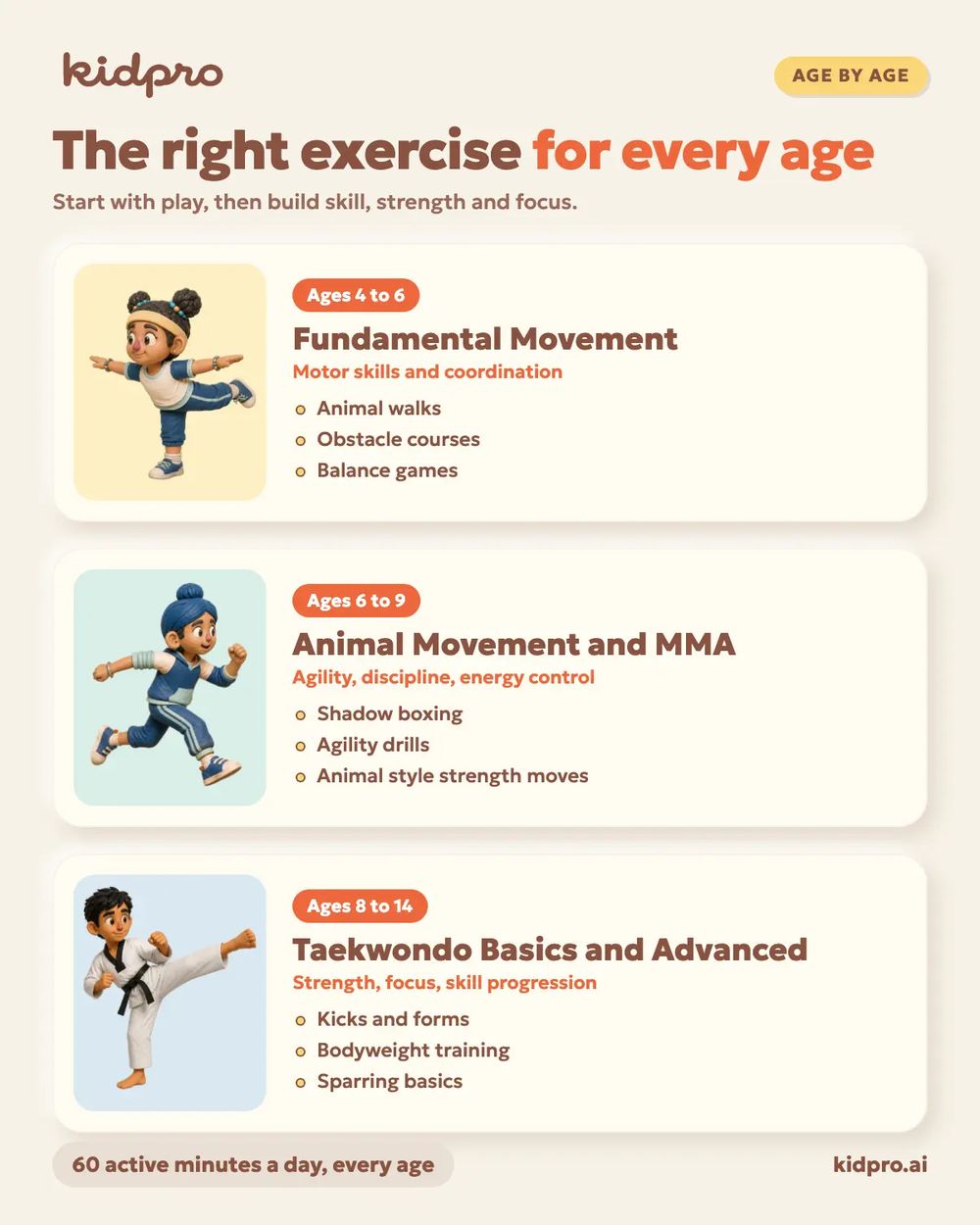
Ages 4 to 6: play-based movement
Young children are still building physical literacy, the basic movement vocabulary their body will rely on for life. Keep everything game-like and varied.
- Animal walks: bear crawl, crab walk, frog jumps
- Walking forwards and backwards along a line of tape on the floor
- Obstacle courses made from pillows and hoops
- Hopping, skipping and freeze games
- Throwing and catching a soft ball
- Yoga poses with animal names, such as cat-cow, cobra and butterfly
At KidPRO, children this age usually start in Fundamental Movement Training or Yoga for Growing Minds, which are both open from age 4.
Ages 7 to 9: structured play
By 7, most kids have better body control and can focus for longer. They're ready for drills with some structure, as long as the session still feels like play.
- Animal movement drills with speed and direction changes, like bear-crawl relays and kangaroo jumps
- Shadowboxing and footwork patterns, with no contact
- Agility ladder steps (a chalk ladder works)
- Partner balance games
- Planks held for 10 to 15 seconds
- Yoga balance poses such as tree pose and warrior III, held for a few slow breaths
Our Animal Movements programme opens at age 6. It combines animal flow patterns with non-contact MMA conditioning (footwork, shadowboxing and defensive movement) and involves no sparring. From age 8, children can also join Taekwondo Basics.
Ages 10 to 14: skills and strength
Older kids can follow multi-step instructions and want to see themselves improve, so clear goals keep them engaged.
- Taekwondo stances, front kicks and roundhouse kicks
- Bodyweight strength work: squats, lunges, push-ups (knees down is fine) and planks
- Jump-and-land drills for explosive power
- Longer yoga flows and stretching routines
- Breathing and focus exercises tied to movement
Parents often ask whether strength training is safe at this age. The American Academy of Pediatrics' 2020 clinical report says children can gain strength with low injury rates when technique comes first and sessions are well supervised. It also points out that resistance training includes body-weight movements, so kids don't need weights to build strength.
Where yoga fits for kids
Kicking, jumping and crawling build power and coordination. Yoga covers the rest: flexibility, balance and the ability to stay still and breathe, which many children find harder than any jumping drill.
Kids' yoga looks very different from an adult class. Poses get animal names, sequences turn into stories, and breathing is taught through games like blowing out pretend birthday candles. Holding tree pose for five breaths trains the small stabilising muscles around the ankle and hip.
Our Yoga for Growing Minds programme, open to ages 4 to 14, uses 20 yoga movements repeated across a 12-week curriculum. Because the movements stay the same, parents can watch their child's control and range improve week by week.
Easy yoga poses to try at home are tree pose, cat-cow, cobra, child's pose, butterfly and downward dog. Keep holds short for younger kids, and stop any stretch before it hurts.
How parents can help (without taking over)
In our experience, whether a child sticks with exercise depends as much on what happens at home as on the class.
- Let them see you move. A 10-minute family walk after dinner does more than any lecture about fitness.
- Protect the time slot. Children often drop an activity because the schedule keeps slipping, not because they dislike it. Leave the workout design to the coach and keep the class on the calendar.
- Praise effort. "I saw how hard you worked on that kick" builds longer-lasting motivation than "You're the best in the class."
- Skip comparisons. Children develop motor skills at different speeds, and being compared with a sibling or classmate often makes them pull back.
- Ask about the fun part. "What did you enjoy most today?" keeps the focus on enjoyment. "Did you win?" puts it on performance.
- Watch sometimes. Dropping in on a class shows support. Commenting through every session adds pressure.
Frequently Asked Questions
What are the easiest exercises for kids to start with?
Animal walks such as bear crawls, crab walks and frog jumps, along with balance games, jumping jacks, pillow obstacle courses and simple yoga poses like tree pose and cat-cow. They need no equipment and little space, and they feel like play, so they suit children as young as 4.
Is yoga good for kids?
Yes. Kids' yoga improves flexibility, balance and body awareness, and breathing exercises give children an easy way to calm down. Children's classes use animal names, stories and games, so even 4-year-olds can join in. Keep holds short and stretches gentle, and never force a child into a pose.
Are online fitness classes just more screen time?
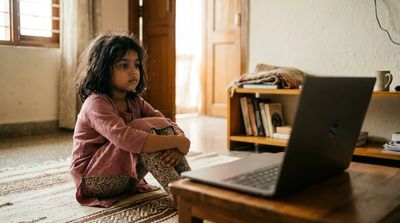
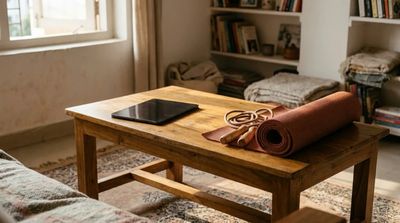
Not in the usual sense. In a live KidPRO class your child is on their feet for the whole 30 to 45 minutes while a coach corrects their form in real time. You'll need about a 6 × 6 ft clear space and a yoga mat
Which KidPRO programme is right for my child?
Fundamental Movement Training and Yoga for Growing Minds are open to ages 4 to 14, Animal Movements to ages 6 to 14, and Taekwondo Basics to ages 8 to 14. In the first session the coach watches how your child moves and suggests the best fit.