@kidpro_india
 KhiladiPro
 @Khiladi-Pro
 kprosport.com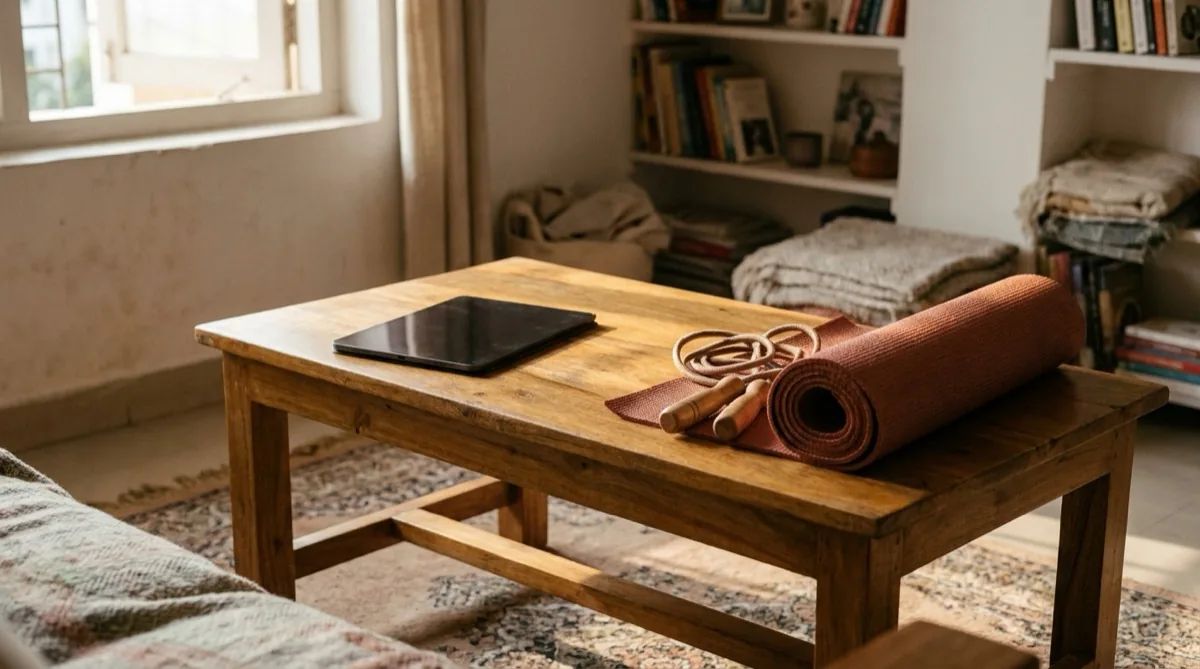
Most advice on children's screen time arrives as a number. Two hours. One hour. None before six. The number is not the problem — the problem is that a number is not a plan, and a parent at 7pm on a Wednesday, with homework unfinished and dinner unstarted, cannot execute a number.
What follows is a structure instead. It assumes an Indian school day, a working parent or two, homework that expands to fill whatever space you give it, and a building where "go outside and play" is sometimes genuinely not available.
Start by measuring, not cutting
Before changing anything, spend three ordinary days writing down two figures: how many minutes your child spent on a screen, and how many minutes they spent moving enough to breathe hard.
Almost every parent who does this is surprised twice. The screen number is higher than they guessed, because it includes the ten-minute gaps — the wait before dinner, the car ride, the stretch while you took a call. And the movement number is far lower, because school PT, which everyone mentally counts, is often twenty minutes of standing in a line for a four-minute turn.
The gap you are trying to close is rarely the two-hour block after school. It is the six ten-minute gaps nobody was counting.
That reframing matters, because ten-minute gaps are much easier to fill than two-hour blocks.
The rule that actually holds: movement buys screen
Rather than rationing screens downward, attach them to activity. The exchange we use with KidPRO families is simple enough for a six-year-old to repeat back:
- Movement comes first in any pairing. Twenty minutes of activity, then the screen.
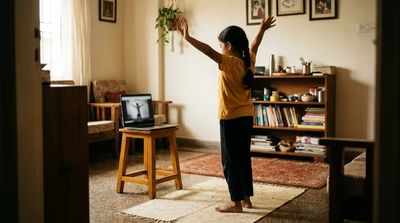
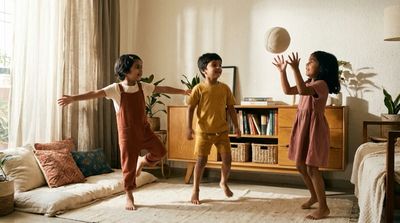
- The activity does not have to be sport. Dancing, climbing stairs, a skipping rope, an obstacle course made of cushions — all of it counts.
- Weekends carry a longer session, not a longer screen allowance.
This works for a reason that has nothing to do with discipline. A child who has just moved is physiologically calmer, and a calmer child negotiates less at the end of the screen session. Parents consistently report that the fight moves from "please get off" to "okay, five more minutes" — which is a different and much smaller fight.
A seven-day structure
Here is the shape of a week that most families can actually hold. Adjust the clock, keep the pattern.
Monday to Friday
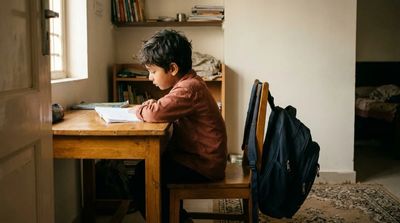
- Twenty minutes, before homework. Not after. Homework expands; the activity slot will be the thing that gets eaten. Put it in the gap between school-uniform-off and study-table-on.
- A two-minute reset at the study table. Every twenty-five minutes of homework, stand up, shake out, roll the shoulders back. This is posture work disguised as a break.
- Screens after dinner, not before. A screen before dinner stretches into dinner. A screen after dinner has a natural stop: bedtime.
Saturday
One longer session — forty-five minutes to an hour — of something structured. A class, a coached session, a game with rules. Structure is the point: free play is wonderful and does not build the specific skills that free play assumes you already have.
Sunday
Family movement, unstructured, with a parent participating. Cycling, swimming, a long walk, badminton in the corridor. The participation part is not sentimentality — children under ten model activity far more reliably from a parent doing it than from a parent instructing it.
What to do when the park is not an option
A large share of Indian families do not have reliable outdoor access. Monsoon, air quality, traffic, no safe ground within walking distance, both parents at work until seven. Any plan that collapses without a park is not a plan for this country.
Everything in the weekday block above fits in roughly two square metres of floor:
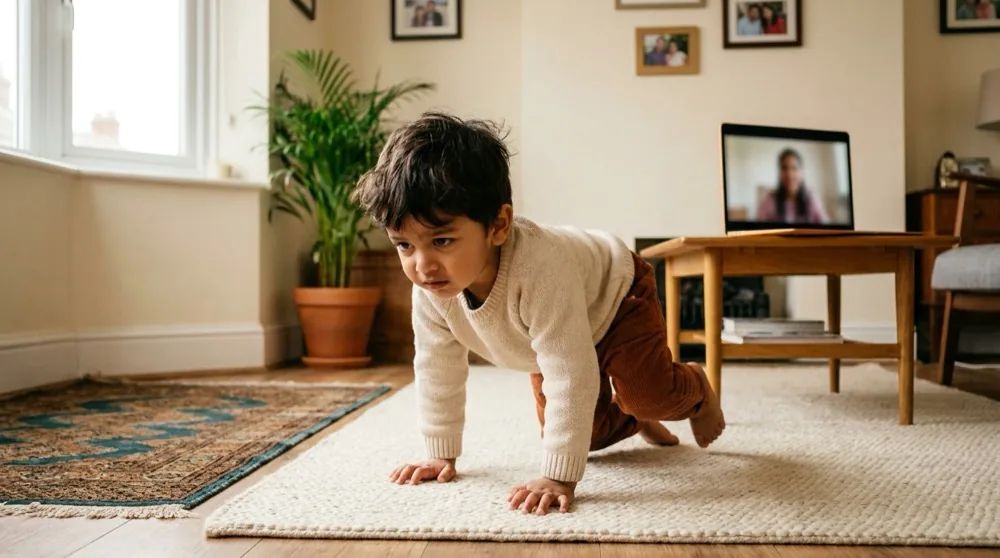
- Animal movements — bear crawl, crab walk, frog jump. These load the shoulders and hips through ranges a seated child never visits.
- Balance holds — single-leg stand, eyes open then closed. Thirty seconds a side.
- Jumping patterns — forward, lateral, and landing softly. Landing mechanics are the single most underrated injury-prevention skill in children.
- Skipping — the highest return per square foot of anything on this list.
Set the rules on a calm Sunday, not in the moment
The last piece is timing. Rules announced during a conflict are heard as punishment; the same rules agreed on a Sunday afternoon are heard as a plan. Write the week on paper, stick it somewhere visible, and let your child choose the activity inside each slot. Choice within structure is what makes a seven-year-old defend the structure instead of testing it.
Give it three weeks before judging it. The first week is novelty, the second is resistance, and the third is when you find out whether the shape fits your household. If it does not, change the clock — not the pattern.
KidPRO runs live, coach-led movement sessions for children aged 4-12, forty-five minutes at a time, from your living room. If the weekday twenty minutes is the part you cannot hold on your own, that is exactly the gap it is built for.