@kidpro_india
 KhiladiPro
 @Khiladi-Pro
 kprosport.com

Screens are now a normal part of children's lives. Kids may use phones, tablets, computers, televisions, or gaming devices for school, entertainment, communication, and other activities. But if your child reaches for a tablet before breakfast and scrolls until bedtime, you're not alone. The average child between ages 4 and 14 now spends between four and seven hours a day looking at a screen far above what most pediatric experts recommend. While technology has its place in learning and play, too much of it quietly reshapes how kids sleep, move, focus, and feel.
While screens can be useful, too much sedentary screen time can also reduce opportunities for physical activity, sleep, outdoor play, family interaction, and other healthy activities.
The goal does not have to be eliminating screens completely. With a few realistic changes, you can help your family build healthier habits that stick. For most families, a more realistic approach is to create healthy boundaries around screen use and make room for movement, play, sleep, social interaction, and family time.
Why Reduce Screen Time for Kids?
Screens aren't inherently harmful, but excessive use during childhood a critical window for physical development can create lasting challenges. Here's what the research and pediatric guidance tell us.
1. Disrupts Sleep Cycle
The blue light from phones and tablets suppresses melatonin, the hormone that signals the body it's time to rest. Children who use screens close to bedtime often take longer to fall asleep and get lower-quality rest, which affects mood and learning the next day.
2. Reduces Physical Activity
Every hour spent sitting with a device is an hour not spent running, jumping, or playing. Sedentary screen habits are strongly linked to childhood obesity, weaker muscles, and poor posture especially in kids who are still developing fundamental movement skills.
3. Affects Attention and Learning
Fast-paced games and endless scrolling train the brain to expect constant stimulation. Over time, this can shorten attention spans and make slower, focus-heavy tasks like reading or homework feel harder.
4. Impacts Emotional Well-Being
Excess screen time, particularly on social platforms, is associated with higher rates of anxiety, irritability, and low mood in children. Face-to-face interaction and active play build the emotional resilience that screens simply can't.
5. Hampers Real-World Skills
Balance, coordination, teamwork, and confidence develop through movement and social play not through a screen. The more time devices take up, the less room kids have to build these lifelong abilities.
How to Reduce Kids' Screen Time
Reducing screen time works best when it's gradual, consistent, and paired with appealing alternatives. Here's a simple framework parents can follow.
Start with an honest audit. Track how much time your child actually spends on screens for a few days. Most families are surprised by the total. You can't manage what you don't measure.
Set clear, realistic limits. Rather than cutting everything at once, reduce screen time in small increments—say, 30 minutes less per day each week—until you reach a healthy target.
Replace, don't just remove. Kids resist having something taken away, but they welcome something fun in its place. Swapping screen hours for active, engaging activities is the secret to lasting change.
Model the behavior yourself. Children copy what they see. If parents are glued to their phones, limits will feel unfair and won't stick.
Tips for Successfully Reducing Screen Time
If your child strongly resists screen limits, don't expect the change to happen overnight. Try these practical strategies:
1. Create Screen-Free Zones
Designate specific areas like the dining table and all bedrooms as device-free. This protects meal times and sleep, two of the most important routines in a child's day.
2. Set Screen Curfew
Turn off all screens at least one hour before bedtime. Use that window for calming, screen-free activities like reading, drawing, or a warm-down stretch.
3. Replace Screens With Structured Movement
One of the most effective ways to reduce screen time is to give kids an activity they genuinely look forward to. Online, coach-led classes—like KidPRO's age-calibrated programmes for ages 4–14—turn screen time into active time. Whether it's Yoga, Fundamental Movement Training, Animal Movement & MMA, or Taekwondo Basics, structured sessions channel energy into skill-building and fun, making the tablet far less tempting.
4. "First This, Then That" Rule
Encourage kids to earn recreational screen time by completing something active or productive first—like a workout, outdoor play, or reading. This builds healthy priorities without constant battles.
5. Plan Screen-Free Family Time
Schedule regular activities everyone enjoys together: a weekend hike, a board game night, or a backyard obstacle course. When family time is fun, screens naturally take a back seat.
6. Keep Devices Out of Sight
Out of sight really is out of mind for kids. Store tablets and phones in a drawer or charging station rather than leaving them on the couch or coffee table where they invite constant use.
The Wellness Benefits of Cutting Down on Screen Time
Reducing screen time isn't about making children dislike technology. It is about creating more opportunities for activities that support physical and emotional wellbeing. When families successfully reduce screen time, the improvements often show up faster than parents expect. Here's what your child stands to gain.
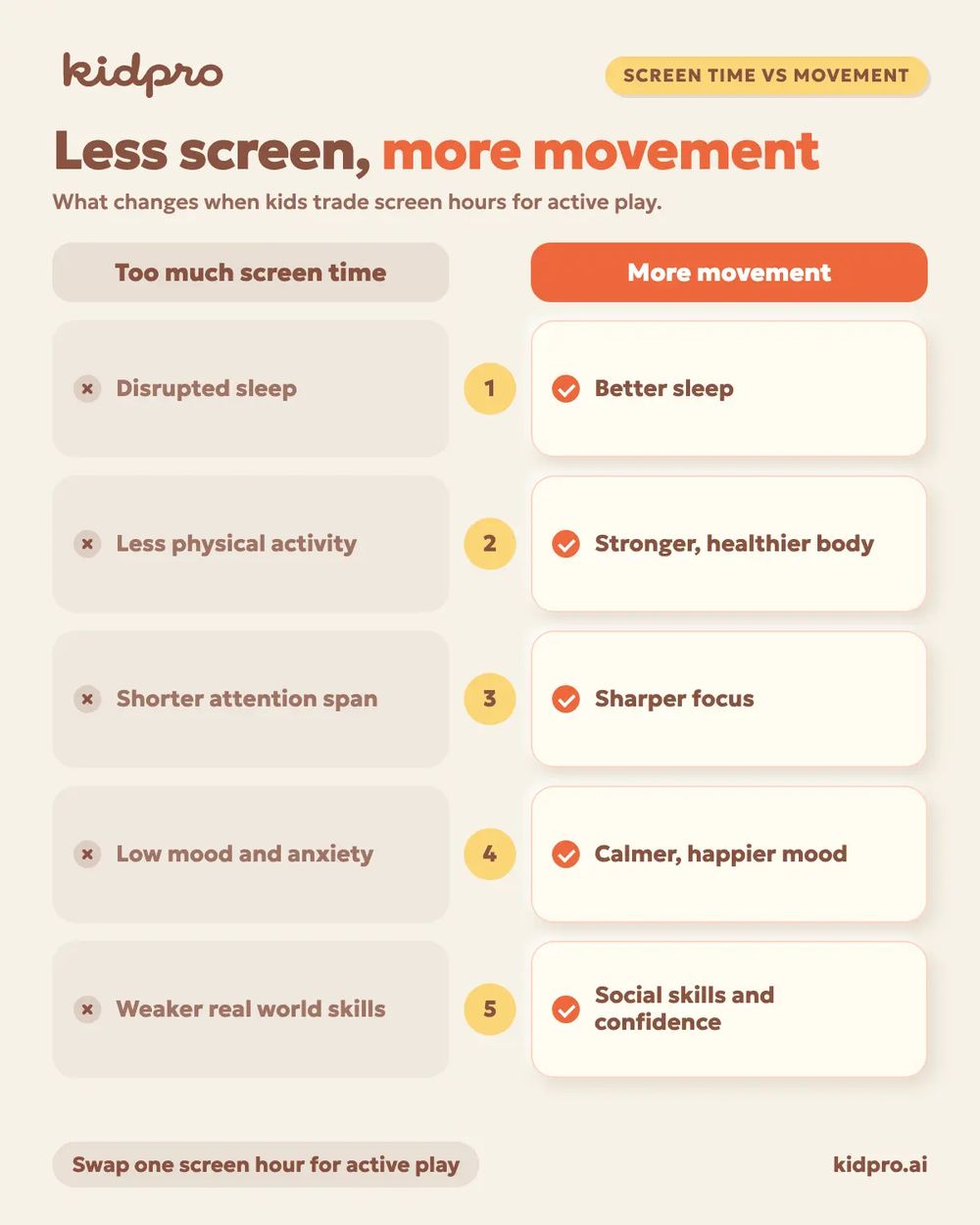
1. Better Sleep
Without late-night blue light, children fall asleep more easily and wake up more rested—improving mood, focus, and overall health.
2. Stronger, Healthier Bodies
More movement means better cardiovascular fitness, stronger muscles, improved coordination, and a healthier weight. Active kids develop motor skills that support them for life.
3. Sharper Focus and Learning
Less overstimulation helps children concentrate longer, absorb information better, and perform more confidently at school.
4. Improved Mood and Emotional Balance
Physical activity releases endorphins that reduce stress and boost happiness. Kids who move more tend to feel calmer, more confident, and less anxious.
5. Stronger Social Skills and Confidence
Group activities, whether in-person or in interactive online classes, teach teamwork, discipline, and communication—building the kind of confidence that carries into every part of a child's life.
6. More Meaningful Family Connection
Reclaimed screen hours become time for shared meals, conversations, and activities that strengthen bonds between parents and children.
Conclusion
Reducing children's screen time does not mean removing technology from their lives. Screens can support education, communication, creativity, and entertainment. The goal is to make sure recreational screen use does not consistently replace physical activity, sleep, family interaction, outdoor play, hobbies, and other important parts of childhood.
The most powerful approach is to replace passive screen hours with something active and engaging. Programmes like KidPRO, which offer online, coach-led classes tailored to children ages 4–14, make that swap easy and enjoyable. From Fundamental Movement Training to Taekwondo, a coach assigns the right track on the very first session, so every child moves at their own level.
Most importantly, make the change as a family habit rather than a punishment. When children have enjoyable alternatives and parents participate alongside them, reducing recreational screen time can become much easier and more sustainable.
Start small, stay consistent, and lead by example. Within weeks, you'll likely notice your child sleeping better, moving more, and simply feeling happier—proof that a little less screen time goes a long way.
Frequently Asked Questions
Should I completely stop my child's screen time?
Not necessarily. The goal is usually to create a healthy balance rather than eliminate all screen use. Consider the child's age, the purpose of the screen use, and whether it is interfering with sleep, physical activity, schoolwork, family time, or other important activities.
How much screen time is healthy for kids?
Most pediatric experts recommend no more than one hour of quality screen time per day for younger children, and consistent limits for older kids. The key is balancing screens with sleep, physical activity, and offline play rather than fixating on an exact number.
How can I reduce my child's screen time?
Start by creating clear screen-free periods, setting consistent household rules, removing devices from the bedroom at bedtime, and providing enjoyable alternatives such as outdoor play, sports, reading, creative activities, or exercise.
What is the best way to reduce screen time without conflict?
The most effective approach is to replace screen time with an engaging alternative rather than simply taking devices away. Offering fun, structured activities—like online movement or martial arts classes—gives kids something to look forward to and reduces resistance.
Is exercise a good alternative to screen time?
Yes. Exercise and active play can provide children with opportunities to move, develop physical skills, and spend less time sitting. Choose activities that are enjoyable and appropriate for the child's age and ability.