@kidpro_india
 @KidProIndia
 @Khiladi-Pro
 kprosport.com
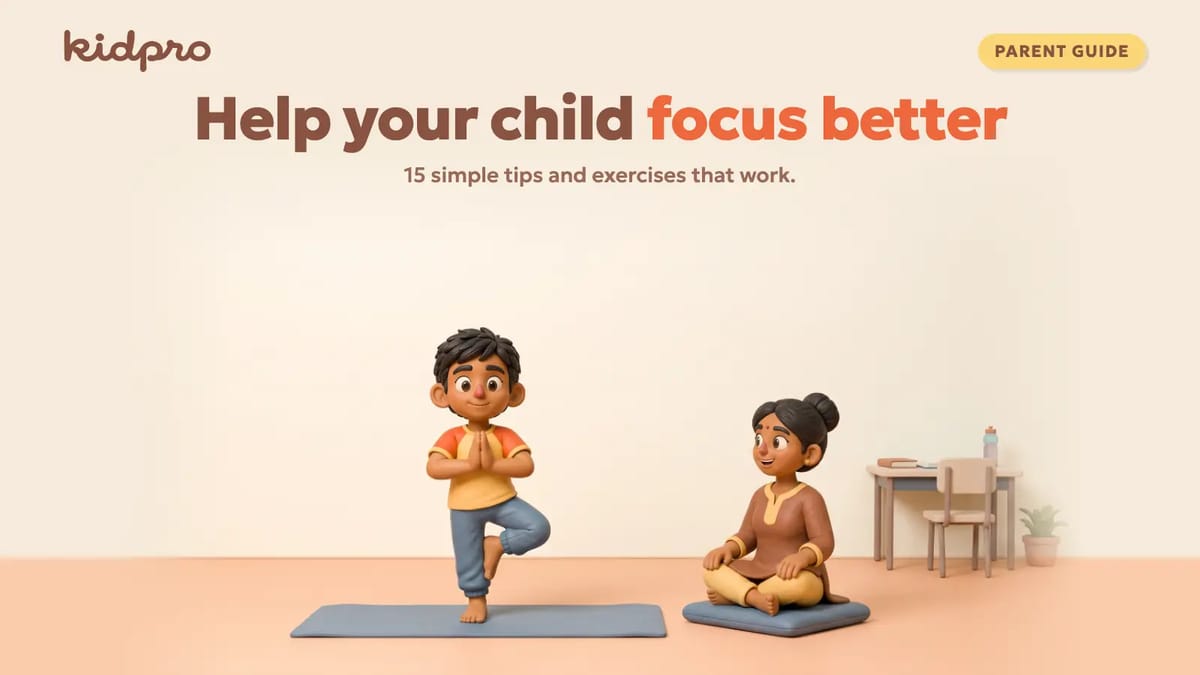
To improve focus in kids, make sure they move every day, sleep well, eat a good breakfast, and take short breaks while studying. Simple concentration exercises, like balance poses and slow breathing, and brain games, like memory cards and puzzles, train the mind to stay on one task for longer.
These tips come from KidPRO's certified coaches, who teach live fitness and yoga classes to children aged 4 to 14. Coaches see every day how a few minutes of movement helps restless kids settle and listen. The health facts below come from the CDC and the American Academy of Sleep Medicine.
Below are 15 simple tips: 5 daily habits, 5 concentration exercises for kids and 5 concentration activities for students.
Why do kids lose focus?
Kids lose focus when their body or mind is tired, hungry, bored or overloaded. It is normal for young children to have short attention spans. Focus grows slowly with age and practice.
Common reasons kids find it hard to concentrate:
- Too little sleep. A tired brain cannot pay attention for long.
- Not enough movement. Kids who sit all day often feel restless and fidgety.
- Too much screen time. Fast videos and games make slow tasks, like homework, feel boring.
- Skipping breakfast. An empty stomach makes it hard to think.
- A noisy or messy study space. Every sound and object pulls attention away.
- Long tasks with no breaks. Even adults lose focus after a while.
How to improve kids concentration: 5 daily habits
The fastest way to improve kids concentration is to fix the basics first. Sleep, food, movement and a calm study space make every other tip work better.
- Move every day. The CDC notes that more active children tend to do better on attention and concentration, and that short activity breaks of 5 to 10 minutes help students stay on task. Aim for about 60 minutes of active play a day.
- Sleep enough. Children aged 6 to 12 need 9 to 12 hours of sleep a night, and teens need 8 to 10 hours. Keep the same bedtime every night.
- Never skip breakfast. The same CDC review links skipping breakfast with weaker attention and memory. Try poha, eggs, oats, idli or curd with fruit.
- Set up a quiet study corner. Use a table, good light and only the things needed for the task. Keep phones and TV out of sight.
- Limit screens before study. Use a "move first, then screen" rule. Our weekly plan for screen time vs active time shows how.
5 concentration exercises for kids
These concentration exercises for kids use the body to train the mind. Each takes 2 to 5 minutes and needs only a small clear space.
- Tree pose. Stand on one leg, place the other foot on the inner leg, and join hands at the chest. Look at one spot on the wall. Hold for 20 to 30 seconds, then switch. Balancing forces the mind to stay in the moment.
- Cross crawl. March in place and touch the right hand to the left knee, then the left hand to the right knee. Do 20 slow touches. Moving across the body builds coordination and makes kids pay attention to each step.
- Balloon breathing. Breathe in slowly through the nose for 4 counts, like filling a balloon. Breathe out through the mouth for 6 counts. Repeat five times. Slow breathing calms a busy mind before homework.
- Animal walks. Do a bear crawl, frog jump and crab walk across the room. Kids must think about where their hands and feet go, which builds focus and body control.
- Mirror game. Stand facing your child. You move slowly and they copy you exactly, like a mirror. Then switch roles. It trains careful watching and listening.
5 concentration activities for students
These concentration activities for students are fun brain games and study habits. They help kids stay on one task for longer.
- Memory card game. Place 10 to 20 cards face down. Kids turn over two at a time and try to find matching pairs. Add more cards as they improve.
- Spot the difference and puzzles. Jigsaw puzzles, mazes and spot-the-difference pictures teach kids to look closely and finish what they start.
- Study in short blocks. Study for 15 to 25 minutes, then take a 5-minute movement break. Younger kids need shorter blocks than older ones.
- One task at a time. Write down three small tasks, like "read one page" or "solve five sums". Tick each one off before starting the next.
- Listening games. Play "Simon says" or read a short story and ask three questions at the end. Kids learn to listen with full attention.
Focus tips by age
A child's attention span grows with age, so match the task to the child.
Ages 4 to 6: Keep tasks short and playful. Use games like the mirror game, animal walks and simple puzzles. A few minutes of focused play is a good start.
Ages 7 to 9: Kids can now follow rules and finish small goals. Try memory cards, tree pose and 15-minute study blocks with a movement break in between.
Ages 10 to 14: Older kids can study for longer, but screens pull at them more. Use 20 to 25 minute study blocks, a phone-free desk and balloon breathing before tests.
When should you talk to a doctor?
Most focus problems get better with good sleep, movement and routine. But talk to your child's doctor if poor focus lasts for months, happens both at home and at school, or comes with problems like very high energy, frequent outbursts or falling far behind in studies. A doctor can check for causes such as sleep problems, vision or hearing issues, or ADHD.
Better focus starts with a body that moves. KidPRO offers live online fitness and yoga classes for kids aged 4 to 14, taught by certified coaches, right from home.
Every class asks kids to watch, listen and follow the coach in real time. That is focus practice, built into fun movement.
Frequently Asked Questions
How can I improve my child's focus naturally?
You can improve your child's focus naturally with daily exercise, 9 to 12 hours of sleep for ages 6 to 12, a healthy breakfast, less screen time and a quiet study space. Add short concentration exercises like tree pose and slow breathing, and brain games like memory cards and puzzles.
What are the best concentration exercises for kids?
The best concentration exercises for kids are tree pose, cross crawl, balloon breathing, animal walks and the mirror game. Each takes 2 to 5 minutes, needs a small space and trains kids to keep their attention on one thing. Do one before homework.
Does exercise help kids concentrate?
Yes. The CDC links higher physical activity with better attention and concentration in students. Even short activity breaks of 5 to 10 minutes are linked with more on-task behaviour in class. Aim for about 60 minutes of active play every day.
Can online fitness or yoga classes improve focus?
Yes. Live classes like KidPRO ask kids to watch, listen and follow a coach in real time, which is focus practice in itself. Regular yoga and movement also help kids feel calmer and less restless, so they can sit and study better afterward.

.webp)