@kidpro_india
 @KidProIndia
 @Khiladi-Pro
 kprosport.com
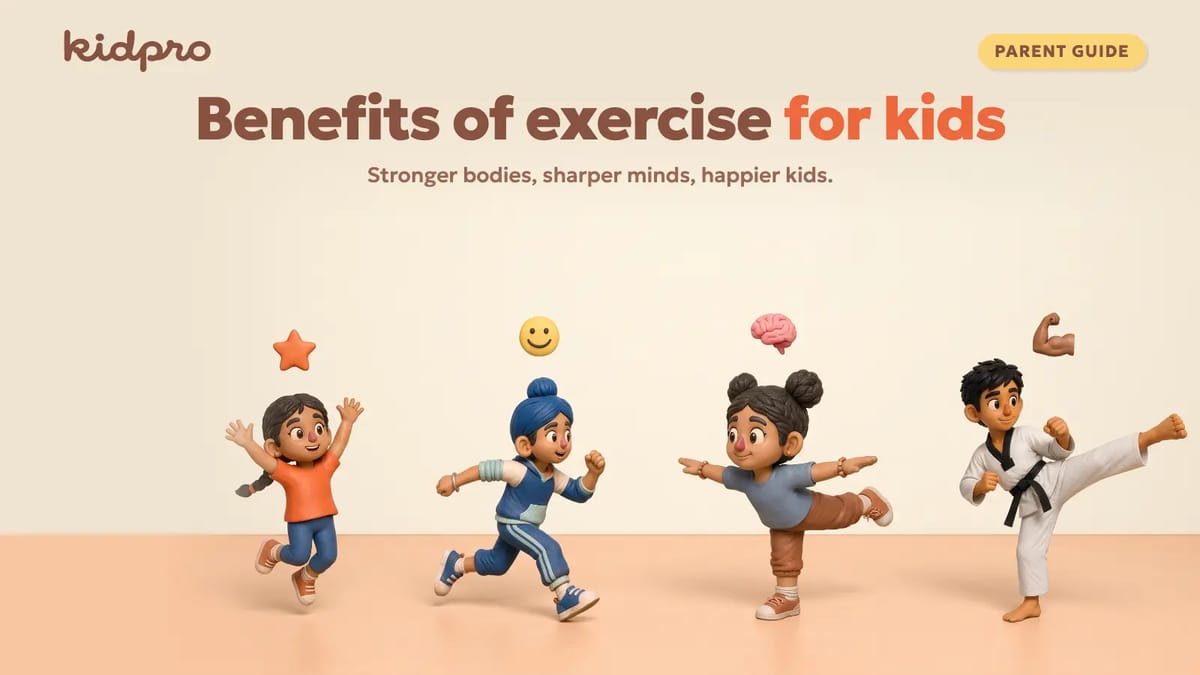
As a parent, you have probably heard that kids need to move more, but do you know why it matters so much, or how much is actually enough? At KidPro.ai, we have worked with thousands of children aged 4 to 14 through structured movement sessions, and we consistently see one truth: exercise is not just about fitness, it is foundational to how kids grow, learn, and feel about themselves. Our certified coaches, trained in child development and pediatric exercise science, design every session around this understanding. This guide breaks down the real benefits of exercise for kids, backed by research and years of hands-on coaching experience, so you can make informed decisions about your child's activity levels.
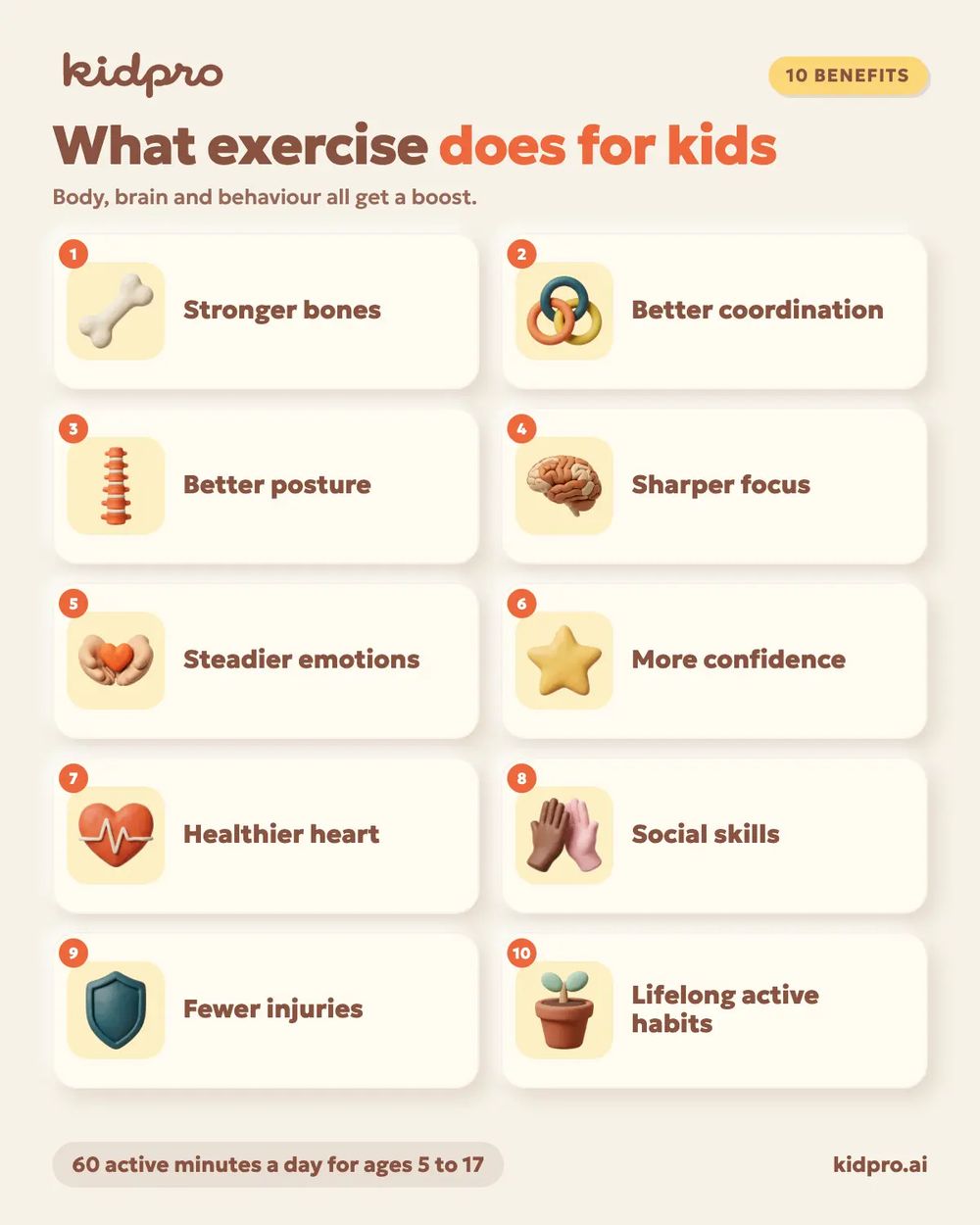
10 Science Backed Benefits of Exercise for Kids
1. Builds Stronger Bones and Muscles
Weight-bearing activities like jumping, running, and climbing during childhood directly impact peak bone density, which affects skeletal health well into adulthood. Structured strength sessions, like those in KidPro's upper and lower body programs, also improve muscular endurance safely for growing bodies.
2. Improves Coordination and Motor Skills
Movement sessions that combine balance drills, jump training, and multi directional exercises help children develop gross motor coordination, a skill linked to better performance in sports, daily activities, and even classroom tasks like handwriting.
3. Corrects Posture Early
Prolonged screen time and sedentary habits are causing postural issues in kids as young as 6. Targeted postural correction exercises, a core part of our KidPro sessions, help realign muscle imbalances before they become long term problems.
4. Boosts Cognitive Function and Focus
Studies show physical activity increases blood flow to the brain, improving attention span, memory, and academic performance. Kids who exercise regularly often show better classroom focus within weeks.
5. Enhances Emotional Regulation
Exercise releases endorphins that reduce anxiety and improve mood. For kids dealing with school stress or social pressures, movement is a healthy emotional outlet.
6. Builds Confidence Through Skill Mastery
When a child learns to run with proper form, jump higher, or master a new balance drill, it builds genuine self esteem, not just physical capability, but a mindset of being able to do hard things.
7. Improves Cardiovascular Health
Regular aerobic activity strengthens the heart and lungs, reducing childhood obesity risk and setting the foundation for lifelong cardiovascular health.
8. Develops Social Skills in Group Settings
Group fitness sessions teach kids teamwork, communication, and healthy competition, skills that transfer directly into classroom and playground interactions.
9. Prevents Injury Through Proper Movement Patterns
Teaching correct running form and jump mechanics early reduces injury risk in future sports participation, something often overlooked in unstructured play.
10. Establishes Lifelong Healthy Habits
Children who enjoy exercise early are significantly more likely to stay active as teens and adults. Fun, engaging sessions, not forced workouts, are key to this long term habit formation.
Best Time for Kids to Exercise
The best time for kids to exercise is when they have natural energy and minimal distractions, typically in the late afternoon between 3 and 6 PM or mid morning on weekends.
Here is why timing matters.
After school, between 3 and 5 PM, kids have released pent up energy from sitting all day, and cortisol levels are balanced, making this ideal for strength and coordination work.
Avoid exercise right after meals. Wait at least 30 to 45 minutes post meal to prevent discomfort during movement.
Avoid sessions too close to bedtime. Exercising within an hour of sleep can overstimulate kids, making it harder to wind down.
Morning sessions work too. For weekend or holiday routines, morning exercise after breakfast improves focus for the rest of the day.
Pro tip from our coaches: Consistency matters more than perfect timing. We recommend parents choose a fixed daily slot so exercise becomes a non negotiable routine, not an afterthought.
How Much Exercise Should Kids Do?
According to the World Health Organization and CDC guidelines, children aged 5 to 17 should get 60 minutes of moderate to vigorous physical activity every day.
This should include the following.
- Aerobic activity should happen daily, through running, jumping, or dancing.
- Muscle strengthening activity should happen at least 3 times a week, through bodyweight exercises or resistance movements.
- Bone strengthening activity should happen at least 3 times a week, through jumping, hopping, or running.
- For younger children aged 4 to 6, focus on unstructured active play plus 15 to 20 minutes of guided movement to build foundational motor skills.
- For ages 7 to 14, structured sessions, like KidPro's 1 on 1 and group programs, become more effective, as kids can follow instructions and build on specific skills like jump explosiveness or running mechanics.
- Note that these are general guidelines. Every child's needs vary based on development stage, health conditions, and current activity level, which is exactly why personalized coaching matters.
How KidPro Makes This Easy for Parents
Knowing the benefits is one thing. Implementing structured, age appropriate exercise consistently is another challenge entirely for busy parents.
Exercise is not just about physical fitness for kids. It is about building confidence, focus, emotional resilience, and lifelong healthy habits. The key is consistency, proper guidance, and age appropriate structure.
That is where our certified coaches come in. Every KidPro.ai session is developmentally appropriate, designed by professionals who understand child growth stages. Sessions are structured yet fun, covering strength, balance, coordination, and postural correction without feeling like work. Sessions are flexible, so parents can choose group sessions for social skill building or 1 on 1 coaching for personalized attention. Sessions are convenient, since online delivery means no commute and no scheduling hassles.
Book a 99 trial session and let our certified coaches show you what structured, expert led movement can do for your child.
Reviewed by Vaibhav Acharya
Animal Movements & Strength Coach, KidPRO. MMA Nationals Gold Medalist and Featherweight Champion. Vaibhav coaches children aged 6–14 in animal movement, core strength and bodyweight training.
View profile
This article was checked by a KidPRO coach for accuracy and safety. It is general information, not medical advice.
Frequently Asked Questions
How many days a week should kids exercise?
Kids should aim for physical activity every day, with at least 3 days including muscle and bone strengthening exercises like jumping, running, or resistance training.
What are the best exercises for kids to build strength?
Bodyweight exercises like squats, push up variations, planks, and jumping drills are ideal. These build functional strength without the risks associated with weight training in young, developing bodies.
Can exercise help my child focus better in school?
Yes. Multiple studies confirm that regular physical activity improves attention span, memory retention, and classroom behavior within weeks of consistent practice.
Is online fitness training effective for kids?
Yes, when led by certified coaches trained in child development. Online sessions offer structured guidance, real time correction, and consistency, often with better engagement than unsupervised outdoor play.
At what age should kids start structured fitness training?
Children as young as 4 can begin structured movement sessions focused on coordination and balance. More advanced strength and explosiveness training typically starts around age 7 to 8, once foundational motor skills are established.
How do I know if my child is exercising too much?
Watch for signs like persistent fatigue, decreased performance, mood changes, or reluctance to participate. A certified coach can help balance intensity based on your child's individual needs, which is why professional guidance matters over generic workout plans.

.webp)