@kidpro_india
 @KidProIndia
 @Khiladi-Pro
 kprosport.com
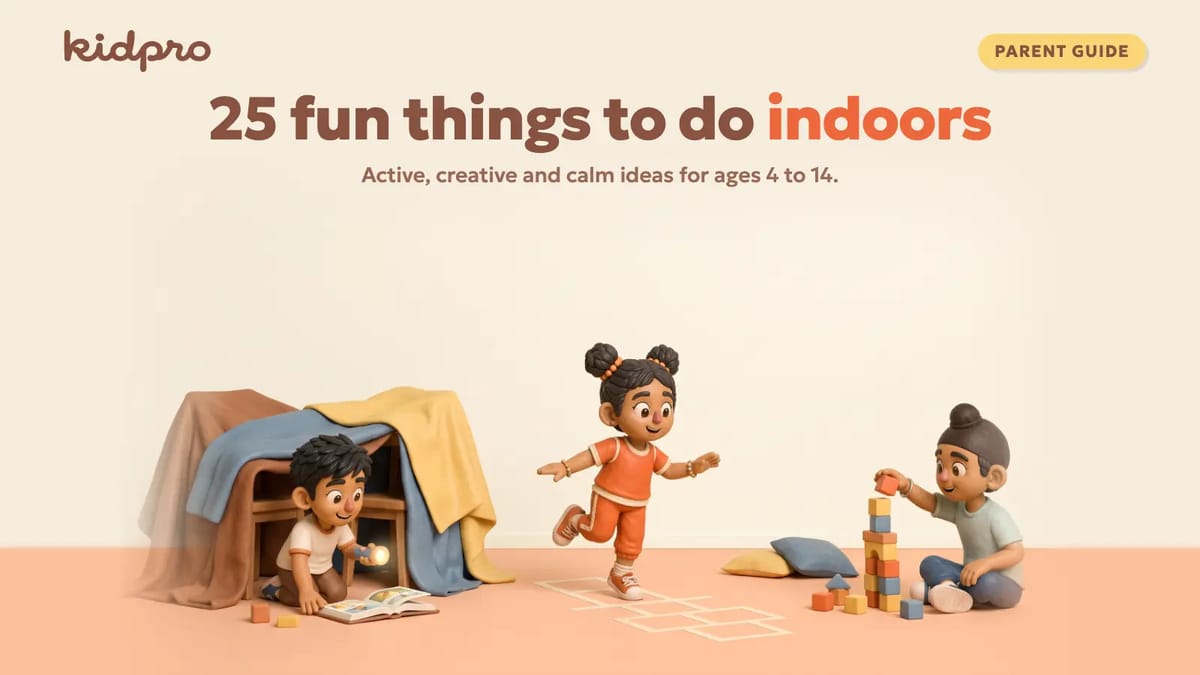
Every parent wants a healthy, happy child. The secret is not big changes. It is small, good habits done every day.
In this guide, you will find 10 good habits for kids, health tips for school students, and simple ways to teach these habits at home.
The 10 good habits for kids are: play actively for 60 minutes a day, sleep on time, eat fruits and vegetables, drink enough water, wash hands, brush twice a day, limit screen time, sit up straight, help at home, and read every day.
Why are good habits important for children?
Habits learned between ages 4 and 14 often stay for life. Good habits help children:
- Stay strong and fall sick less often
- Sleep better and feel fresh in the morning
- Focus better in class
- Feel confident and do things on their own
How long does a habit take to form? One well-known study found it took about 66 days of daily practice for a new habit to feel automatic. Missing one day did not undo the progress. So keep going, even if your child misses a day.
10 good habits for kids
These 10 healthy habits for children help the body, the mind and daily life. Do not start all ten at once. Pick two or three first.
1. Play actively for 60 minutes a day
The World Health Organization says children aged 5 to 17 need about 60 minutes of active play a day. This means play that makes them breathe faster, like running, cycling, skipping or dancing.
Easy tip: Break it into small parts. Try 20 minutes in the morning and 40 minutes in the evening. See our easy exercises for kids by age for ideas.
2. Sleep at the same time every night
Children aged 6 to 12 need 9 to 12 hours of sleep every night. Children aged 3 to 5 need 10 to 13 hours, including naps. Good sleep helps memory, mood and growth.
Easy tip: Keep the same bedtime, even on weekends. Switch off screens 30 to 60 minutes before bed.
3. Eat fruits and vegetables every day
Never skip breakfast. It gives energy for school. Add a fruit or vegetable to every meal. Good choices include roti, poha, oats, dal, eggs, curd and paneer.
Easy tip: Let your child choose one new fruit or vegetable each week. Kids eat more of what they pick.
4. Drink enough water
Sometimes a tired or cranky child is just thirsty. Water is the best drink. Keep juices and soft drinks for special days.
Easy tip: Give your child their own water bottle. Refill it after school and after play.
5. Wash hands with soap
Handwashing is one of the easiest ways to stop germs. Teach your child to wash before eating, after using the toilet and after coming home.
Easy tip: Scrub for 20 seconds. That is about as long as singing "Happy Birthday" twice.
6. Brush teeth twice a day
Brush once in the morning and once before bed. Young children need a parent to check until they can brush well alone.
Easy tip: Link it to another task, like "after I wear my night clothes, I brush."
7. Limit screen time
Screens are fine in small amounts. But too much sitting takes time away from play, sleep and family.
Easy tip: Use one simple rule: "Move first, then screen." Read our weekly plan for screen time vs active time.
8. Sit and stand up straight
Long hours with books, phones and heavy school bags can cause a bent back. Good posture now means fewer aches later.
Easy tip: Use a study table of the right height. Add a few posture exercises for kids to the day.
9. Help at home
Small chores teach responsibility. Children can put away toys, pack their school bag or set the table.
Easy tip: Give each child one job and the same time to do it every day.
10. Read every day
Reading for 15 to 20 minutes a day builds new words, focus and imagination. It is also a calm way to end the day.
Easy tip: Keep books where your child can reach them. Read together at bedtime.
How to teach good habits for kids
To teach good habits, start small, link each habit to a daily moment, and lead by example. Praise your child for trying, and make it fun. Here is how to do it, step by step:
- Start small. Pick one or two habits at a time. "Drink a glass of water after brushing" is easier than "be healthy".
- Link it to a daily moment. Tie each habit to something that already happens. For example: "After school, I wash my hands."
- Be a role model. Children copy what they see. If you read, walk or eat fruit, they will too.
- Praise the effort. Say "well done" when they try. A missed day is okay. Just start again.
- Make it fun. Turn habits into games or family challenges. Kids stick with what they enjoy.
- Do it together. Kids follow friends and family. Group activities make habits easier to keep.
How KidPRO helps kids build good habits
KidPRO helps kids build the hardest habit of all: daily exercise. It offers live online fitness classes for children aged 4 to 14, taught by certified coaches, right from home.
Many families struggle to fit in daily activity. School, homework, traffic and screens take up the day. KidPRO makes it easy. Each class is 30 to 45 minutes long. Your child only needs a 6×6 ft space and a yoga mat.
Here is how KidPRO helps exercise become a habit:
- Fixed class times: 12 live classes a month build a steady routine.
- Live coach feedback: Coaches fix your child's posture and form during class.
- Progress kids can see: Streaks and points keep children excited. Parents get monthly progress reports.
- Classes for every age: Fundamental Movement Training (ages 4–14), Animal Movements (6–14), Taekwondo Basics (8–14) and Yoga for Growing Minds (4–14).
- Better screen time: Your child is not just watching. They are moving with a real coach.
Want to try it? Book your child's first KidPRO class for ₹99. There is no commitment.
Reviewed by Vaibhav Acharya
Animal Movements & Strength Coach, KidPRO. MMA Nationals Gold Medalist and Featherweight Champion. Vaibhav coaches children aged 6–14 in animal movement, core strength and bodyweight training.
Frequently Asked Questions
What are 10 healthy habits for a child?
The 10 healthy habits for a child are: 60 minutes of active play, a fixed bedtime, eating fruits and vegetables, drinking water, washing hands, brushing twice a day, limiting screen time, good posture, helping at home and reading daily. Start with two or three, then add more.
At what age should kids start learning good habits?
Kids can start learning good habits at age 2 or 3. Begin with easy ones like washing hands, brushing teeth and putting toys away. From age 4 to 14, they can take on more, like packing their bag and following a daily exercise routine.
How long does it take a child to form a habit?
It is different for every child. One study found it took about 66 days of daily practice, on average, for a habit to feel automatic. Some took less time and some took more. Keep the habit at the same time each day and be patient.
Can online fitness classes help kids build healthy habits?
Yes. Live online classes like KidPRO give kids a fixed schedule, a coach who guides them, and progress they can see. These three things help exercise become a daily habit. Classes happen at home, so there is no travel.
.webp)