@kidpro_india
 @KidProIndia
 @Khiladi-Pro
 kprosport.com
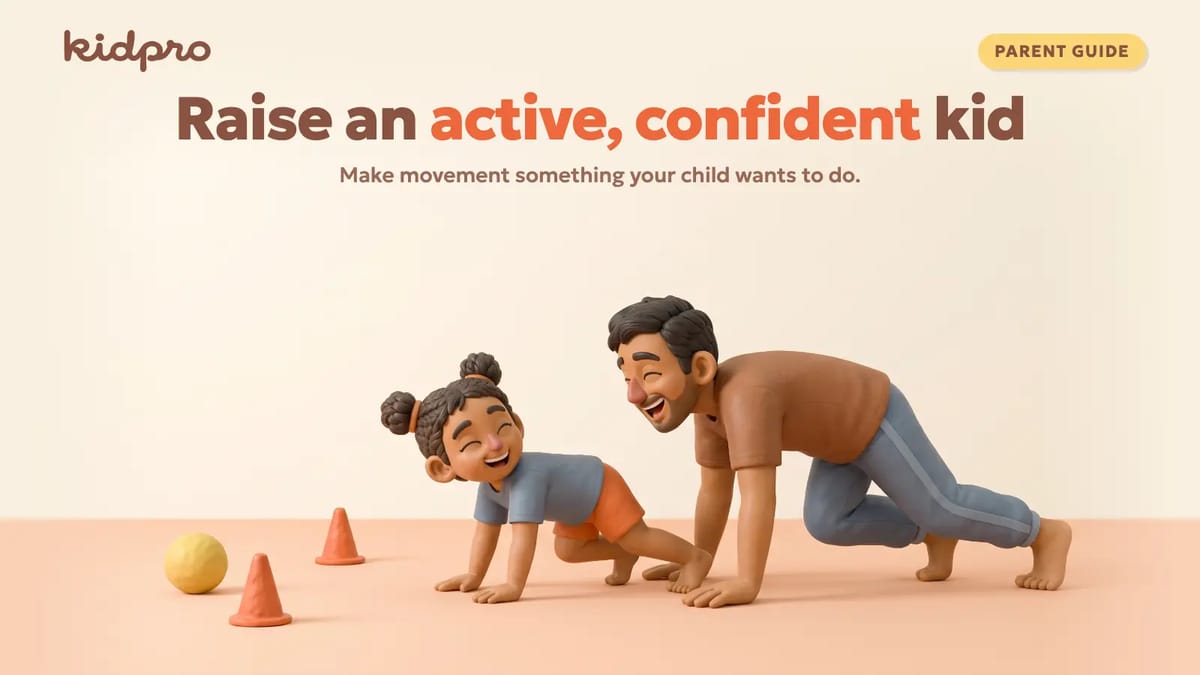
Getting kids off the couch and moving is one of the most common struggles parents face today and it's rarely about laziness.
The fastest way to encourage a child to exercise is to make movement feel like play, not punishment pairing short, fun, achievable activities with genuine parental involvement, rather than pressure or lectures about "being healthy."
The need for this shift is backed by hard numbers. According to the Physical Activity Alliance's 2024 United States Report Card, only about one in five children aged 6–17 meets national physical activity guidelines, earning the country an overall grade of D-minus. Globally, a World Health Organization funded study found roughly 80% of adolescents fall short of the recommended 60 minutes of daily activity.
The good news: fixing this doesn't require expensive gear or forcing kids into sports they hate just the right approach. This guide covers how to build that approach, the precautions parents should take, and how KidPro makes staying active easier.
How to Encourage a Child for Exercise?
Encouraging a child to exercise is less about motivation techniques and more about removing the barriers that make movement feel hard, boring, or optional in the first place. Here's how to do it effectively.
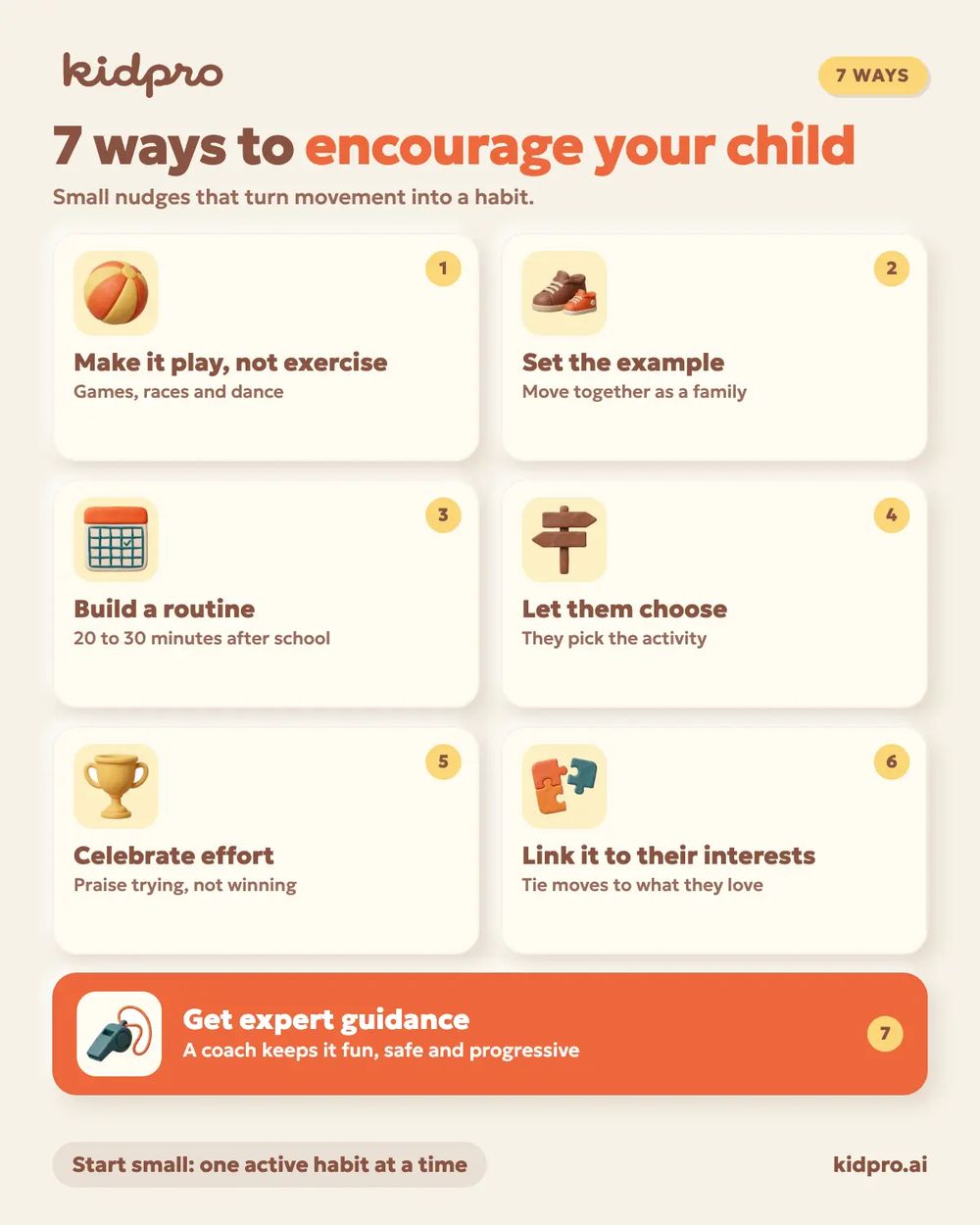
1. Make It About Play, Not "Exercise"
Children rarely respond to the word "exercise" the way adults do. Framing movement as a game tag, obstacle courses, dance challenges, or "beat your own record" jumping drills taps into a child's natural instinct to play, which is far more motivating than any pep talk.
2. Set the Example Yourself
Kids model behavior far more than they follow instructions. A parent who visibly enjoys movement a walk after dinner, a quick stretch session, a weekend bike ride sends a much stronger message than any verbal encouragement. Research consistently shows that children of physically active parents are significantly more likely to be active themselves.
3. Build a Routine, Not a One-Off Event
A single trip to the park won't build lasting habits. What works is a predictable rhythm for example, 20–30 minutes of movement after school, or a set "active time" on weekends. Once movement becomes part of the daily structure, children stop resisting it the way they might resist a "special" activity.
4. Involve Them in the Choice
Children are far more likely to stick with an activity they had a say in choosing. Offering two or three options "Do you want to do the trampoline game or the balance beam challenge today?" creates a sense of ownership that pure instruction never will.
5. Celebrate Effort, Not Just Performance
Praising a child for trying hard, improving their balance, or simply showing up rather than only for winning or "being the best" builds intrinsic motivation. This matters especially for children who are naturally less coordinated or athletic, since early experiences of shame around performance are one of the biggest reasons kids quit physical activity altogether.
6. Connect Movement to Something They Already Love
If a child loves superheroes, frame strength exercises as "hero training." If they love animals, turn a warm-up into "animal walks." Linking exercise to a child's existing interests dramatically increases engagement a principle also core to the Superman Hold and other posture-correction exercises for kids, where imaginative framing makes strength training feel like a game rather than a chore.
7. Give It Structure With Expert Guidance
Left unstructured, "playtime" alone often isn't enough to build genuine strength, coordination, and healthy movement patterns especially for correcting issues like poor running form or a slouched posture developed early on, discussed in our earlier guide on child posture exercises. This is where a structured, coach-led program like the sessions offered through KidPro bridges the gap between "kids need to move more" and actually building strength and confidence in a lasting way.
As a Parent, What Precautions Should You Take to Avoid Inactivity in Kids?
Preventing inactivity is just as important as encouraging exercise and often, it starts with recognizing the everyday habits that quietly work against an active lifestyle.
1. Watch Screen Time Closely
The American Academy of Pediatrics (AAP) recommends limiting screen time to one hour per day of high-quality programming for children aged 2–5, and setting consistent, health-conscious limits for children aged 6 and older specifically ensuring media use doesn't replace sleep or physical activity. Unmonitored screen time is one of the single biggest contributors to sedentary behavior in children today.
2. Don't Let Sedentary Behavior Become the "Default" Option
Children tend to gravitate toward whatever requires the least effort. If the easiest, most available option at home is a screen or a couch, that will win by default. Precaution here means making movement the easy choice keeping a jump rope, ball, or balance board accessible, rather than tucked away.
3. Be Alert to Early Signs of Physical Underdevelopment
Poor balance, frequent tripping, low stamina during play, or a visibly rounded posture can all be early indicators that a child isn't getting the movement variety their body needs. These are often the same signs that show up before postural issues become noticeable something we cover in more depth in our guide to the best exercises for posture correction in kids.
4. Avoid Over-Scheduling Passive Time
Between school, homework, tutoring, and screen-based entertainment, many children's schedules simply don't have room left for movement. Parents should treat physical activity as a non-negotiable block of time, the same way they would treat homework or meals not an optional extra squeezed in "if there's time."
5. Don't Rely Solely on School PE
School physical education alone is rarely sufficient. Data from the National Physical Activity Plan shows that a large majority of American children still don't meet the recommended 60 minutes of daily activity, even with school-based programs in place meaning additional structured movement outside school hours is often necessary to close the gap.
6. Watch for Activity Avoidance Tied to Confidence, Not Laziness
Sometimes a child's reluctance to move isn't about disinterest it's about self-consciousness over being less coordinated than peers. This is one of the most overlooked precautions: addressing the emotional barrier to activity, not just the physical one, often through low-pressure, skill-building environments like 1:1 coaching rather than competitive group sports.
Tips to Motivate Kids to Stay Active Daily
Motivation isn't a one-time push it's built through small, repeatable strategies that make activity feel rewarding day after day.
1. Use a Visual Progress Tracker
A simple sticker chart or point system for "active days" gives children a visual sense of accomplishment. Watching progress build over a week or month often motivates kids more than any verbal reminder.
2. Keep Sessions Short and High-Energy
Younger children especially respond better to several short bursts of activity (10–15 minutes) throughout the day rather than one long, demanding session. Short sessions also reduce the chance of a child associating exercise with exhaustion or frustration.
3. Turn Family Time Into Active Time
Replacing even one sedentary family activity per week like a movie night with an active one, such as a walk, bike ride, or backyard game, reinforces that movement is a normal, enjoyable part of family life, not a separate "task."
4. Introduce Variety to Prevent Boredom
Doing the same activity every day gets old fast. Rotating between strength-based games, balance challenges, jumping drills, and simple runs keeps kids engaged and also builds a broader range of physical skills coordination, explosiveness, and balance rather than just one.
5. Give Them a Reason Beyond "Because It's Healthy"
Kids rarely care about long-term health benefits. They care about being able to run faster, jump higher, or keep up with friends. Framing activity around these immediate, tangible goals is far more motivating than abstract health messaging.
6. Use Group Energy When Possible
Children are often more motivated when moving alongside peers the shared energy and light competition of a group setting can turn a reluctant child into an enthusiastic one. This is one of the reasons interactive group sessions, alongside more individualized 1:1 coaching, are core to how KidPro structures its programs giving families the flexibility to choose whichever format keeps their child most engaged.
7. Bring in Expert Structure When Motivation Alone Isn't Enough
Even with the best intentions, many parents find it difficult to consistently plan, supervise, and correctly guide a child's exercise routine at home. This is exactly the gap KidPro is built to fill combining certified child development expertise with engaging, structured online sessions covering upper and lower body strength, balance, jump explosiveness, running form, and postural correction (see our detailed breakdown of posture-focused exercises for kids), so children stay consistently active without parents having to become fitness experts themselves.
With certified coaches who understand child development not generic personal trainers KidPro turns "staying active" from a daily struggle into something kids genuinely look forward to, whether through the camaraderie of a group class or the focused attention of a 1:1 session.
Conclusion
Encouraging a child to exercise isn't about willpower theirs or yours. It's about designing an environment where movement is easy, fun, and consistent, while staying alert to the everyday habits excessive screen time, over-scheduled passive hours, or quiet confidence issues that can quietly encourage inactivity instead.
The research is clear: most children today, both in the U.S. and globally, fall short of basic activity recommendations. But the same research shows this is highly changeable with the right structure and support. Small, playful, consistent efforts reinforced by expert-guided sessions when needed are what turn a reluctant child into an active, confident one.
If you're looking for that structure, KidPro offers certified, child-development-focused coaching through fun, interactive group and 1:1 online sessions for kids ages 4–14 built specifically to make daily activity something children want to do, not something they're told to do. Book a session with a KidPro coach and take the guesswork out of keeping your child active.
Reviewed by Vaibhav Acharya
Animal Movements & Strength Coach, KidPRO. MMA Nationals Gold Medalist and Featherweight Champion. Vaibhav coaches children aged 6–14 in animal movement, core strength and bodyweight training.
This article was checked by a KidPRO coach for accuracy and safety. It is general information, not medical advice.